

How to Help Your Child Manage Big Emotions: A Parent's Guide
How to Help Your Child Manage Big Emotions: A Parent's Guide
It’s a scene every parent knows all too well: the sudden, floor-shaking tantrum over a broken cookie. The inconsolable tears because it’s time to leave the playground. The flash of fury when a sibling grabs a toy. These moments can feel overwhelming, not just for your child, but for you as the parent trying to navigate the storm.
When we face these outbursts, our instinct is often to shut them down quickly. We might say things like, "You're overreacting," "Calm down," or "There's no reason to cry." While these phrases usually come from a good place—wanting our kids to be happy—they can send an unintended message: that big emotions are bad and should be suppressed.
But what if we saw these moments differently? What if we viewed them not as misbehavior, but as a cry for help from a developing brain that is simply overwhelmed? Teaching emotional regulation for children is one of the most fundamental jobs of parenting. It’s about giving them the tools to understand and navigate their inner world.
At Lewis Family Psychiatry, we believe that by helping your child with managing big emotions, you aren't just surviving the next tantrum; you are building a resilient foundation for their lifelong mental health.
Why Are Their Emotions So Big?
If you’ve ever felt like your child is going from zero to one hundred in seconds, you aren't imagining it. A child’s brain is very much a work in progress.
The part of the brain responsible for intense emotions like fear and anger—the amygdala—is fully developed from birth. It's the brain's alarm system. However, the prefrontal cortex, which acts as the brain’s "CEO" responsible for logic, impulse control, and rational thinking, doesn't fully mature until a person is in their mid-20s.
This means your child has a powerful, fast-acting emotional gas pedal but a very underdeveloped braking system. When a big feeling hits, their amygdala effectively hijacks their brain. At that moment, they are physically incapable of "just calming down" on command. Their intense reaction isn't a sign of manipulation; it's a sign of a brain doing exactly what it's designed to do at that developmental stage.
Recognizing this biological reality is the first step toward responding with empathy instead of frustration. Your role is not to punish the feeling but to help them build the "brakes" they will need for the rest of their lives.
The Power of Naming It to Tame It
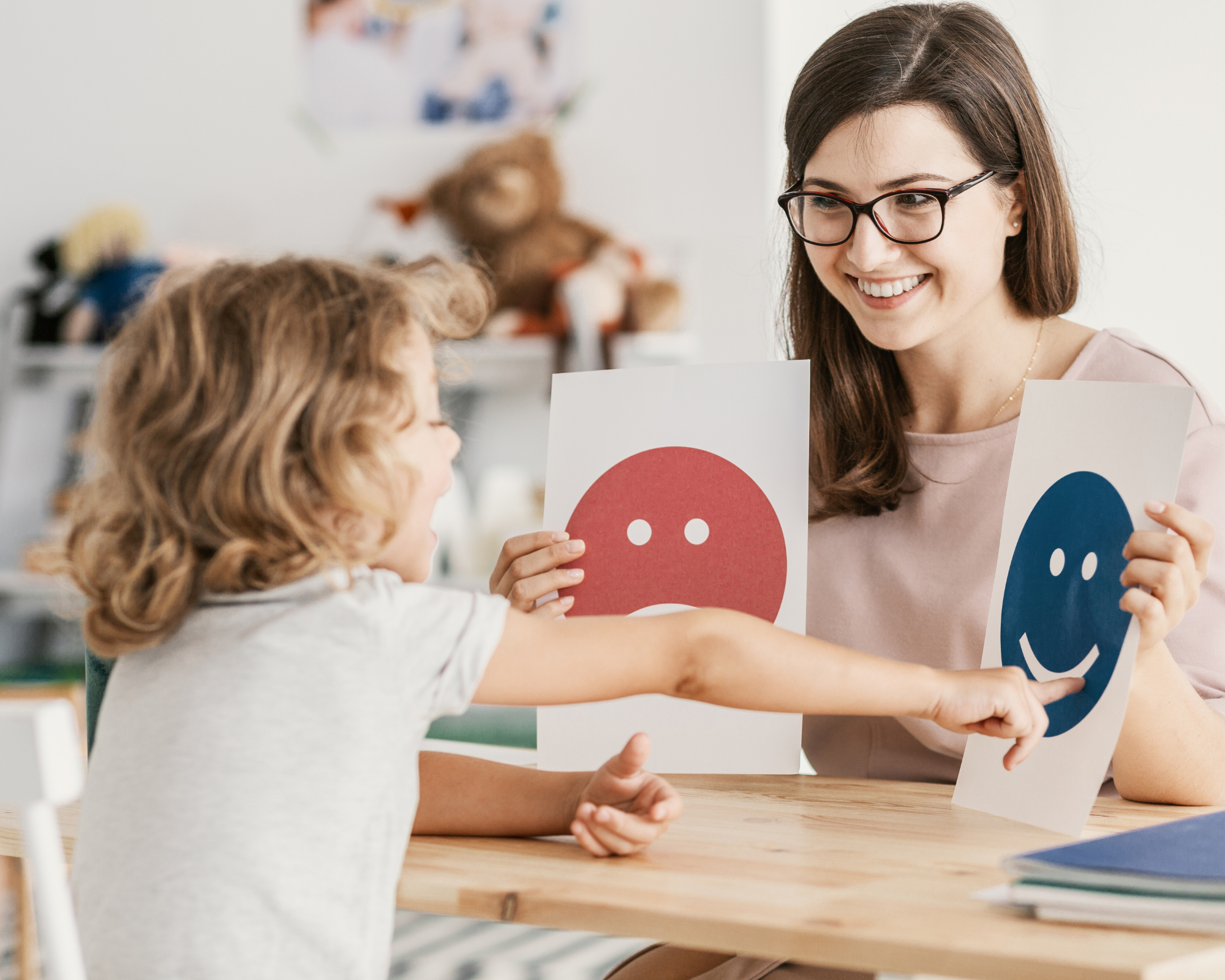
One of the most crucial skills in emotional regulation for children is emotional literacy—the ability to identify and name feelings. A child who can say, "I am so mad!" is already one step closer to managing that anger than a child who can only express it by hitting or screaming.
Naming an emotion makes it less scary. It shrinks the "monster" in the closet down to something manageable. When we give our children the vocabulary for their experience, we empower them to communicate their needs rather than act them out.
Co-Regulation: Be Their Emotional Anchor
For young children, emotional regulation starts as a two-person job. This process is called co-regulation. Think of it as lending them your calm until they can find their own. You act as their external prefrontal cortex while theirs is still under construction.
Here is how you can practice co-regulation in the heat of the moment:
Get on Their Level
Kneel down so you are face-to-face. towering over a distressed child can trigger more fear. Getting on their level is less intimidating and shows you are there to connect, not to command.
Validate the Feeling
Acknowledging the emotion is not the same as condoning the behavior. It simply tells your child, "I see you, and your feeling makes sense."
Instead of: "Don't be sad, you can play with that toy later."
Try: "You feel so sad that we have to leave the park. It’s really hard to stop when you’re having so much fun."
Name the Emotion
Help them label what is happening inside their body.
"It looks like you’re feeling frustrated because that block tower keeps falling."
"I can see how disappointed you are that the party was canceled."
This validation often diffuses the intensity of the emotion immediately. When a child feels heard and understood, the need to "scream" their feeling to get your attention diminishes.
Practical Strategies for Navigating Big Feelings
Once you have validated the feeling and the storm has settled slightly, you can start giving your child tools to move through it. These parenting tips for emotional health focus on action and self-soothing.
1. Create a "Calm-Down Corner"
This is distinct from a time-out chair, which can feel punitive. A calm-down corner is a safe, cozy space your child can choose to go to when they feel overwhelmed. The goal is to teach them to recognize their need for a break and seek a soothing environment.
What to include:
Soft pillows or a bean bag
A weighted blanket
Noise-canceling headphones
Fidget toys
Picture books regarding feelings
A small bottle of bubbles (blowing bubbles forces deep breaths)
How to introduce it:
Introduce the corner when your child is calm and happy. You might say, "This is our 'Cozy Corner.' When your body feels tight and your feelings get too big, you can come here to help your body feel calm again."
2. Teach Calming Physical Actions
Big emotions create a surge of adrenaline and energy in the body. That energy needs to go somewhere. Channel it into productive, non-destructive actions rather than suppressing it.
For Anger: "It's okay to be angry, but it's not okay to hit. Let's hit this pillow instead." Or, "Let’s go outside and stomp our feet like a dinosaur."
For Anxiety: Teach "box breathing." Breathe in for four counts, hold for four, breathe out for four, and hold for four. You can trace a square in the air or on their hand to make it visual.
For Sadness: A tight hug can release oxytocin, a calming hormone. Ask, "Do you need a hug to help with the sads?"
3. Externalize the Emotion
Sometimes it helps to think of the emotion as a separate entity that is just visiting, rather than who the child is.
Give it a name: "It looks like 'Mr. Mad' is here. What does Mr. Mad want to do? Can we tell him to use his quiet voice?"
Draw it out: Give your child paper and crayons and ask them to draw what their anger or sadness looks like. What color is it? Does it have a face? This helps them process the feeling without being defined by it.
Your Behavior is the Blueprint
More than any specific technique, the way you manage your own emotions is your child's primary instruction manual. They are constantly watching you to see how you handle stress.
Try narrating your feelings to let them hear your internal process. You might say, "I'm feeling frustrated because I can't find my keys, and it's making us late. I'm going to take three deep breaths before I look again."
And when you inevitably snap or raise your voice—because we all do—circle back and apologize. "I'm sorry I yelled. I was feeling very stressed, but it wasn't okay for me to speak to you that way." This teaches them that everyone makes mistakes and that repair is always possible.
Know When to Seek Help
Teaching emotional regulation is a long-term process with ups and downs. It is completely normal for progress to feel slow. However, if your child's emotional outbursts are consistently extreme, happening frequently, causing significant problems at school or with peers, or if they are self-harming, it may be time to seek professional support.
A child therapist or psychiatrist can help rule out underlying issues and provide targeted strategies for your family. At Lewis Family Psychiatry, we specialize in helping families navigate these complex waters, ensuring both you and your child have the support you need.
Building a Foundation for the Future
Helping a child with managing big emotions is one of the most challenging—and rewarding—parts of parenting. Remember, you are not just stopping a tantrum; you are nurturing an emotionally intelligent human being who has the resilience to navigate the complexities of life.
By offering empathy, providing tools, and modeling healthy coping skills, you give your child an internal compass that will guide them long after they've outgrown your lap.
