

How Telemedicine Can Help Your Teen Open Up About Their Feelings
How Telemedicine Can Help Your Teen Open Up About Their Feelings
Being a parent is a journey filled with incredible highs, but also moments of deep uncertainty. I remember standing outside my own teenager’s bedroom door not long ago, hand hovering over the knob, wondering if knocking would lead to a breakthrough or just another shutdown. It’s tough watching your child withdraw, especially when every question you ask is met with a shrug or silence.
You want to help—desperately—but you might worry that traditional therapy feels too intimidating for them. Or maybe the thought of coordinating one more appointment in an already chaotic schedule feels like a battle you just can't win. I’ve been there, and I know that helpless feeling well.
But here is the good news: mental health support is evolving, and it’s meeting our kids exactly where they are. Telemedicine is changing the landscape of teen therapy. It’s more than just a convenience; it offers a comfortable, private bridge that encourages even the most reluctant teens to open up and thrive. At Lewis Family Psychiatry, we've witnessed firsthand how this shift to digital care can transform a withdrawn adolescent into an engaged, communicative young adult.
The Comfort of the Home Advantage
Think about where you feel most safe. For most of us, and especially for our kids, it’s home. It’s their sanctuary.
For a teenager struggling with anxiety or depression, walking into a clinical office can feel overwhelming. The waiting room, the unfamiliar smells, the face-to-face intensity with a stranger—it all adds layers of pressure before the session even begins.
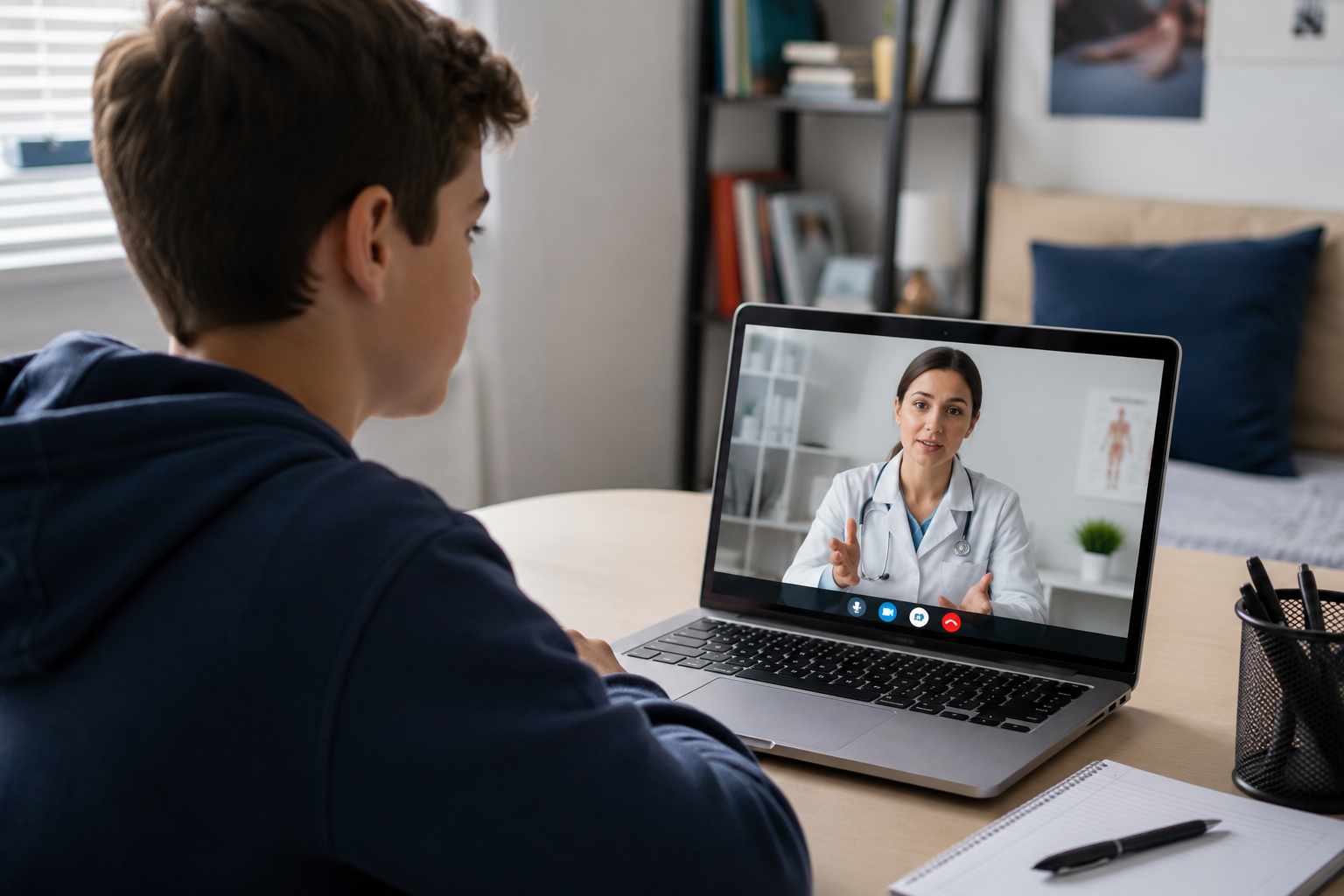
Telemedicine removes those barriers. By connecting from home, your teen remains in their safe space. They can sit in their favorite gaming chair, curl up on their bed, or even have the family dog sleeping at their feet. This immediate sense of physical comfort often translates to emotional safety.
When the environment feels familiar, the defenses naturally lower. I’ve seen teens who were famously silent in traditional settings suddenly find their voice simply because they were wearing their own hoodie in their own room. This relaxed atmosphere encourages them to let their guard down, making therapy feel less like a medical appointment and more like a supportive conversation.
Privacy and Control: Empowering Your Teen
Adolescence is a time defined by a fierce desire for independence and privacy. The fear of being seen walking into a therapist’s office by a classmate can be enough to make a teen refuse help entirely. The stigma, while lessening, is still real in their world.
Telemedicine sessions offer a level of privacy that in-person visits simply can’t match. There are no awkward run-ins in the waiting room. No one at school needs to know. Your teen can log in, have their session, and log out without leaving their safe zone.
Furthermore, telemedicine gives them a sense of control. In a video call, they can control the volume, the lighting, and even the camera angle. It might sound small to us, but for a teen who feels like their life is spinning out of control, these small agencies matter. It empowers them.
Giving them this autonomy sends a powerful message: We respect your space, and we are here on your terms. This approach often reduces resistance and helps them engage with support sooner rather than later.
Speaking Their Language
Let’s face it: our kids are digital natives. They have grown up with screens as their primary mode of communication. While we might prefer face-to-face interaction, for many teens, typing or video chatting feels more natural and less intense than sitting across from an adult in a quiet room.
Telemedicine leverages this digital comfort zone. A video call lowers the barrier to entry for honest conversations. The screen acts as a safety buffer, making difficult topics feel slightly less confronting.
I recall working with a young girl who found it incredibly difficult to make eye contact when discussing her anxiety. In our video sessions, she could look at her own screen or look away without the social pressure of constant eye contact. That small digital distance gave her the courage to speak truths she had been holding inside for months. By meeting them in their digital world, we make therapy feel approachable, modern, and relevant to their lives.
Success Story: Leo’s Transformation
Sometimes, the best way to understand the power of this approach is to see it in action. Let me share the story of Leo (name changed for privacy), a 15-year-old boy I worked with.
Leo was struggling deeply with social anxiety. School had become a nightmare, and at home, he was retreating further and further into his shell. His parents were heartbroken and terrified. They tried to get him to see a counselor in town, but the mere idea of going to an office caused him panic attacks. He refused to go.
That’s when his parents reached out to us about telemedicine. We agreed to try it, with zero pressure.
For our first session, Leo didn't even turn his camera on. And you know what? That was okay. We just talked. He was in his room, safe. I was on his screen, just a voice offering support.
Week by week, things shifted. By the third session, the camera was on. By the fifth, he was showing me his art projects. Because the therapy met him where he felt safest, Leo began to engage. He started communicating his feelings, articulating his fears, and learning coping mechanisms.
Eventually, Leo returned to his extracurricular activities and reconnected with his family. The transformation wasn't magic; it was the result of removing the friction and letting him access help in a way that didn't terrify him.
Easier for Parents, Too
Let’s be honest—parenting a teen is a logistical olympics. Between school, sports, tutoring, and your own work, finding an extra two hours a week to drive to and from a therapy appointment can feel impossible.
Telemedicine fits therapy into your family’s life, not the other way around. No more fighting traffic across town. No more sitting in your car waiting for the hour to be up.
This convenience means appointments are kept more consistently. Consistency is key in mental health treatment. When it’s easy to attend, the work gets done, and you start seeing real results faster. It gives you the peace of mind that comes from knowing your child is getting high-quality care without adding stress to the family dynamic.
Is Telemedicine Right for Your Teen?
If you are reading this and nodding along, seeing your own child in these descriptions, know that there is hope. If your teen is reluctant to try therapy, values their privacy deeply, or feels anxious in clinical settings, telemedicine could be the bridge they need.
It isn’t just a "backup" option; for many teens, it is the better option. It gives them access to holistic, evidence-based mental health support while allowing them to remain in the driver's seat of their own comfort.
At Lewis Family Psychiatry, we believe in looking at the whole picture—your child’s environment, their unique personality, and your family’s needs. We are here to walk this path with you, ensuring your teen feels heard, validated, and empowered to heal.
Ready to Help Your Teen Thrive?
You don't have to navigate this silence alone anymore. If you're ready to help your teen open up and find the support they need in a way that feels safe for them, we are here to help.
Contact Lewis Family Psychiatry today to schedule a telemedicine session. Let's work together to bring the light back into your teen's life.
